

Search engine optimization (SEO) is one of the most important strategies for improving website visibility, increasing organic traffic, and driving conversions. But when businesses start optimizing their websites, they often encounter two critical terms: technical SEO vs on-page SEO.
Although both are essential for search engine rankings, they serve very different purposes.
In this guide, you’ll learn:
- What technical SEO is
- What on-page SEO is
- The key differences between them
- Why both matter for rankings
- Best practices for each
- How to create a balanced SEO strategy
Whether you’re a beginner, marketer, or business owner, this article will help you understand how these SEO components work together to boost your online presence.
What Is Technical SEO?
Technical SEO refers to optimizing the backend structure and technical foundation of a website so search engines can crawl, index, and rank pages effectively.
Unlike content-focused optimization, technical SEO deals with website performance, architecture, and usability.
Main Goals of Technical SEO
The primary objectives are:
- Improve website crawlability
- Enhance indexation
- Increase site speed
- Ensure mobile-friendliness
- Strengthen website security
- Create a better user experience
If search engines cannot properly access or understand your website, even great content may struggle to rank.
Key Elements of Technical SEO
1. Website Speed Optimization
Fast-loading websites improve both user experience and search rankings.
Important techniques include:
- Image compression
- Browser caching
- Minifying CSS and JavaScript
- Using a CDN (Content Delivery Network)
2. Mobile-Friendliness
With Google’s mobile-first indexing, your website must perform well on smartphones and tablets.
Responsive design is now essential.
3. XML Sitemaps
An XML sitemap helps search engines discover and crawl important pages on your website efficiently.
4. HTTPS Security
Secure websites using HTTPS encryption are favored by search engines and users alike.
5. Crawlability and Indexation
Technical SEO ensures search engine bots can:
- Access pages
- Follow links
- Understand site hierarchy
- Index content correctly
6. Structured Data Markup
Schema markup helps search engines better interpret content and may improve visibility with rich snippets.
7. Core Web Vitals
Google evaluates user experience through metrics like:
- Largest Contentful Paint (LCP)
- Interaction to Next Paint (INP)
- Cumulative Layout Shift (CLS)
Optimizing these metrics can improve rankings.
What Is On-Page SEO?
On-page SEO focuses on optimizing the content and visible elements of web pages to improve relevance and user engagement.
It helps search engines understand what your content is about while making pages more useful for readers.
Key Elements of On-Page SEO
1. Keyword Optimization
Optimizing keywords : Strategically placing target keywords in:
- Titles
- Headings
- URLs
- Meta descriptions
- Body content
helps search engines determine page relevance.
For this topic, keywords may include:
- technical SEO vs on-page SEO
- difference between technical and on-page SEO
- technical SEO checklist
- on-page SEO optimization
2. High-Quality Content
Content should be:
- Original
- Helpful
- Well-structured
- Comprehensive
- Search intent focused
Google rewards content that demonstrates expertise and value.
3. Title Tags and Meta Descriptions
Optimized titles improve click-through rates and help rankings.
Example:
Title Tag: Technical SEO vs On-Page SEO: Differences Explained
Meta Description: Discover how technical SEO and on-page SEO differ and learn the best practices to improve your website rankings.
Syggested guide – Check all SEO meta tags
4. Header Tags (H1, H2, H3)
Proper heading structure improves readability and content organization.
5. Internal Linking
Internal links help users navigate your site while distributing SEO authority across pages.
6. Image Optimization
Optimized images improve page speed and accessibility.
Best practices include:
- Descriptive file names
- Alt text
- Compressed image sizes
7. User Experience (UX)
Easy navigation, readability, and engaging design contribute to better SEO performance.
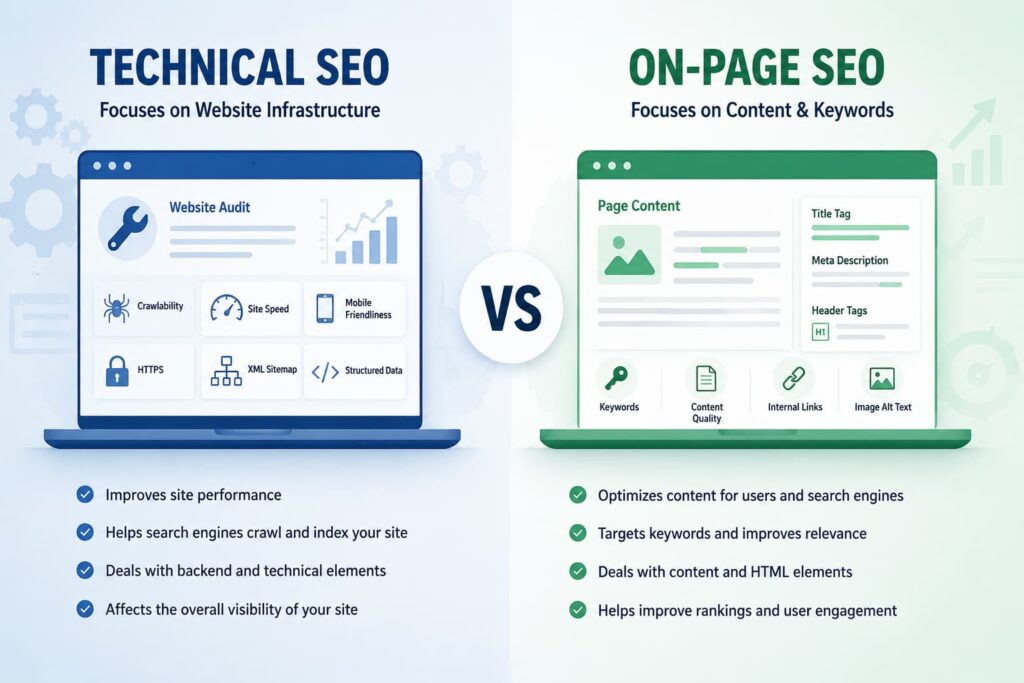
Technical SEO vs On-Page SEO: The Core Difference
The biggest difference between technical SEO and on-page SEO is their focus.
| Technical SEO | On-Page SEO |
|---|---|
| Focuses on website infrastructure | Focuses on content optimization |
| Helps search engines crawl and index | Helps search engines understand relevance |
| Improves speed and performance | Improves keyword targeting |
| Backend optimization | Frontend optimization |
| Supports usability and accessibility | Supports content quality and engagement |
In simple terms:
- Technical SEO makes your website accessible
- On-page SEO makes your content valuable
Both are necessary for strong organic rankings.
Why Technical SEO and On-Page SEO Must Work Together
Many websites fail because they focus on only one aspect of SEO.
For example:
- Great content on a slow website may not rank well
- Fast websites with weak content won’t satisfy search intent
Search engines prioritize websites that offer:
- Excellent user experience
- Relevant content
- Fast performance
- Easy navigation
- Mobile compatibility
That’s why combining technical SEO and on-page SEO creates the best results.
Technical SEO Best Practices
Improve Site Speed
Use tools like:
- Google PageSpeed Insights
- GTmetrix
- Lighthouse
to identify performance issues.
Optimize for Mobile Devices
Ensure responsive design and fast mobile loading speeds.
Fix Broken Links
Broken links harm user experience and crawl efficiency.
Regularly audit your site.
Use Structured Data
Schema markup can enhance search visibility with rich results.
Create a Clean URL Structure
Good example:
example.com/technical-seo-vs-on-page-seo
Bad example:
example.com/page?id=12345
On-Page SEO Best Practices
Write for Humans First
Avoid keyword stuffing.
Focus on solving user problems naturally.
Optimize Content Depth
Long-form content often performs better because it answers questions comprehensively.
Use Semantic Keywords
Include related phrases and variations naturally throughout the article.
Examples:
- SEO optimization techniques
- search engine ranking factors
- website SEO strategies
Improve Readability
Use:
- Short paragraphs
- Bullet points
- Clear headings
- Simple language
Add Internal Links
Link to related blog posts and service pages to improve navigation and authority flow.
Check Top 12 On page SEO Techniques
Common Mistakes to Avoid
Ignoring Technical Issues
Even high-quality content can struggle if:
- Pages load slowly
- Mobile usability is poor
- Pages aren’t indexed
Keyword Stuffing
Overusing keywords can hurt readability and rankings.
Duplicate Content
Search engines prefer original content.
Poor Site Architecture
Confusing navigation negatively impacts both users and search engines.
Which Is More Important: Technical SEO or On-Page SEO?
This is a common question, but the answer is simple:
Neither is more important — both are essential.
Think of your website like a car:
- Technical SEO is the engine
- On-page SEO is the design and driving experience
Without a strong engine, the car won’t run. Without a good experience, nobody wants to use it.
The best SEO strategy combines both technical excellence and high-quality content.
Suggested -Which On Page Element Carries the Most Weight for SEO in 2025
Final Thoughts
Understanding the difference between technical SEO vs on-page SEO is crucial for building a successful SEO strategy.
To summarize:
- Technical SEO improves website performance, crawlability, and infrastructure
- On-page SEO optimizes content, keywords, and user engagement
When combined effectively, these strategies can:
- Increase organic traffic
- Improve rankings
- Enhance user experience
- Boost conversions
If you want long-term SEO success, focus on creating a technically sound website with valuable, optimized content.
Explore more –On-page SEO Vs Off-page SEO
Frequently Asked Questions
Is technical SEO harder than on-page SEO?
Technical SEO can be more complex because it involves backend optimization and website infrastructure. On-page SEO is generally easier for beginners.
Can I rank with only on-page SEO?
You may rank for low-competition keywords, but technical issues can limit your growth and visibility.
How often should I audit technical SEO?
A technical SEO audit should be performed every 3–6 months or after major website changes.
What tools help with technical and on-page SEO?
Popular SEO tools include:
Google Search Console
Ahrefs
SEMrush
Screaming Frog
Yoast SEO
Are you focusing more on technical SEO or on-page SEO for your website? Share your experience in the comments and let us know which strategy has delivered the best results for your rankings.